
Where “Realistic” Actually Starts
“Okay, but what is the most realistic hair topper?”
Our partner salons talk to people with thinning hair and receding hairlines every single day. Some are totally new to toppers, some have tried a few and hated them, and some are on their third ‘this one finally works’ piece.
In our opinion, there isn’t one magic topper that beats all others. There is, however, a perfect combo of features that makes a topper look insanely real – even up close, even outdoors, even in bad lighting.
Below, we’ll break down what actually matters when you want the most realistic result, so you can decide what kind of topper is best for you, not just what looks good in a product photo.
The Base: Where “Realistic” Actually Starts
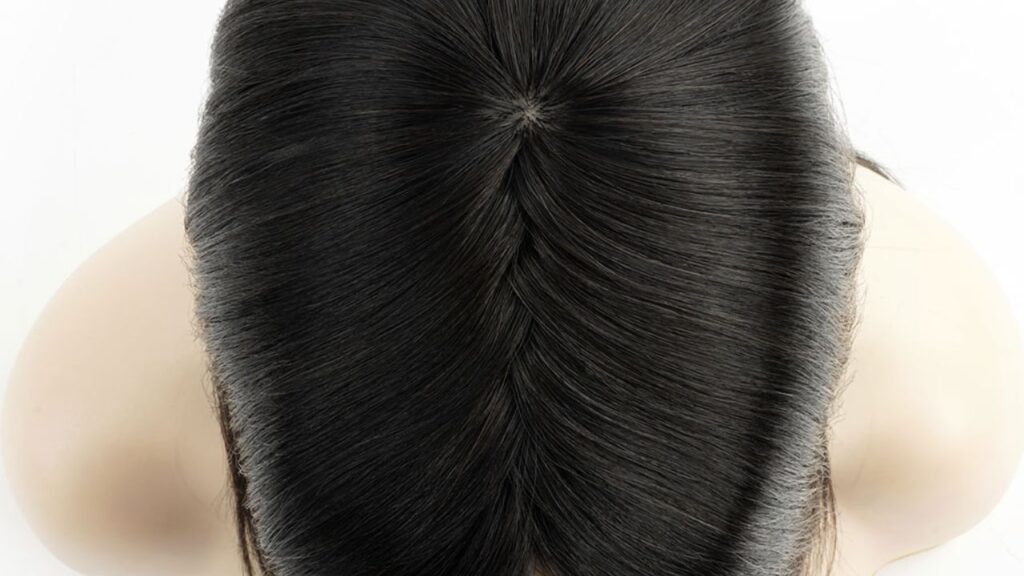
You can have amazing hair on top, but if the base looks wrong, the whole topper will look fake because you need the base to blend with the scalp, so people won’t see there’s an extra layer of something over the scalp.
The most realistic toppers offered at Newtimes Hair usually use one or a mix of these base types:
Lace Base – Natural and Breathable
- Fine lace that sits directly on your scalp.
- Hair is knotted into the lace.
- Gives a soft, natural-looking front hairline and good airflow.
Great for: people who want a light, breathable topper and a more invisible edge at the front.
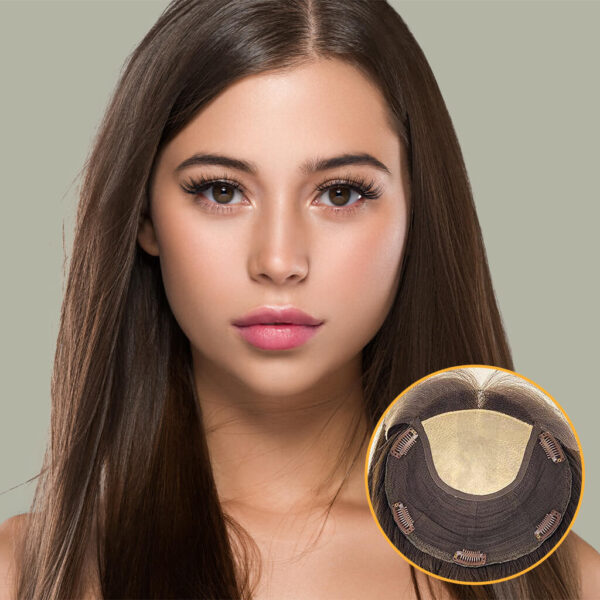
Lace Frontals – Natural and Easy to Apply for Receding Hairlines
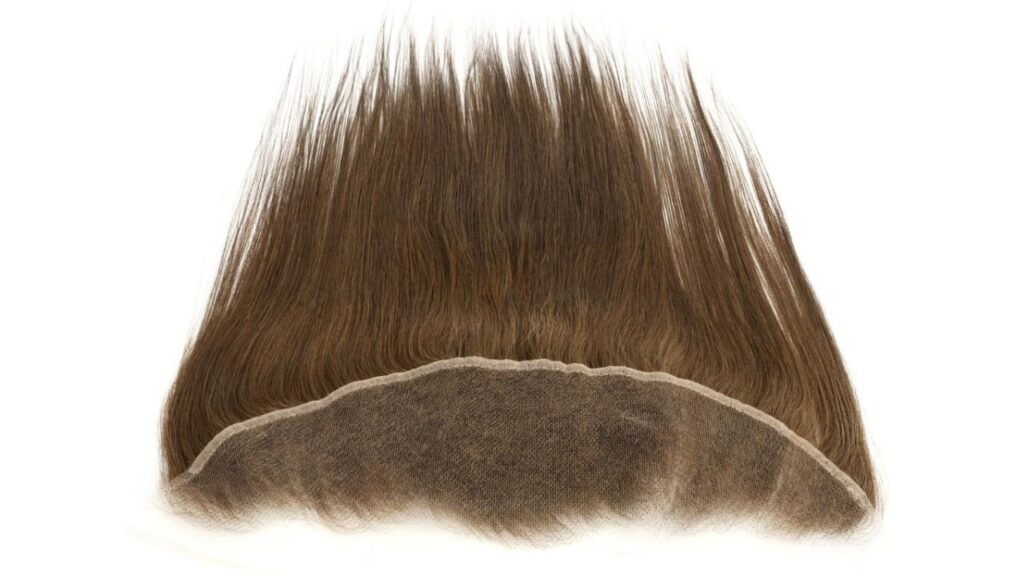
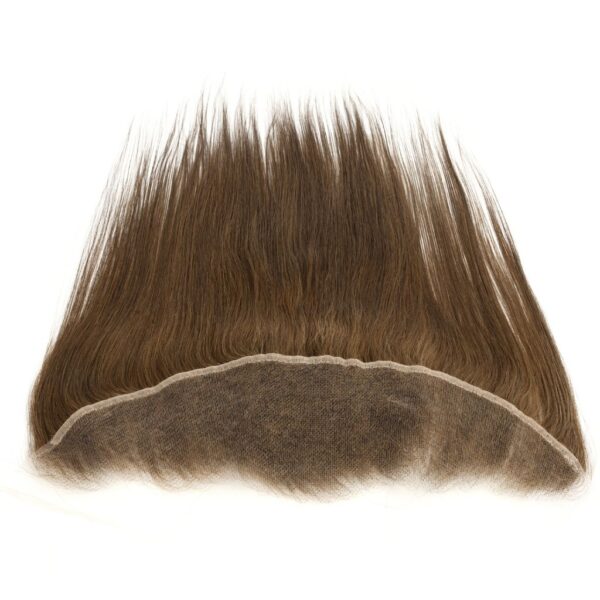
Some women suffer only from a receding hairline. For this population, please recommend lace frontals. The partial lace or skin base covers only the front hairline area and helps solve hair loss specifically along the front hairline. It’s an easy, cost-effective solution for both men and women.
Silk Top – The “Scalp Illusion”
Silk top toppers are those with the hair knotted to the lace layer of the base and pulled out through a layer of silk material on the top. So the hair shows no knots, making it look like the hair is growing out of the natural scalp. The silk top looks just like the surface of a natural scalp.
- Multi-layer design that hides the knots under a silk layer.
- When you part the hair, it looks like the scalp.
- Very convincing for the middle and side parts.
Great for: perfectionists who care a lot about how the part looks.
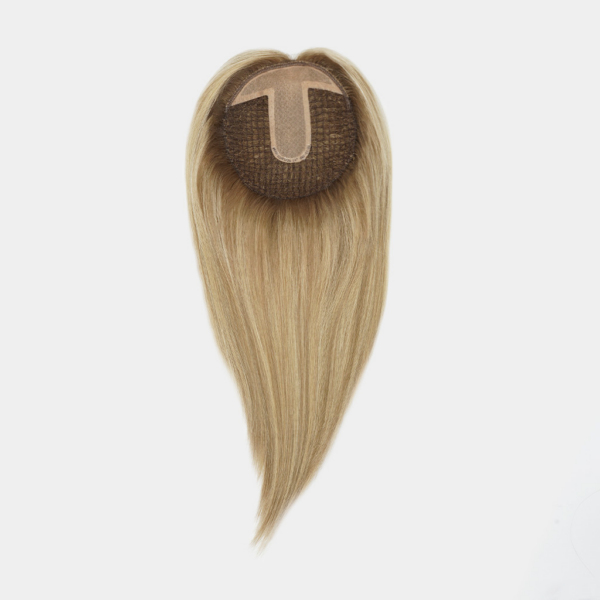
Mono / PU Combos – Structure + Styling Freedom
Mono hair toppers are durable. Most toppers have clips for them to be clipped to the wearer’s natural hair, and wearers plan to wear them for a long time. That’s why we use mono as the base for a lot of our hair toppers. The PU perimeter is usually used to strengthen the overall base structure so it doesn’t fray easily. Newtimes mono Hair toppers usually have a silktop to mimic the scalp surface.
- Monofilament or PU (polyurethane) areas can add durability and help with attachment.
- It can still look realistic if designed well, especially away from the very front.
Great for: people who want a balance between realism, strength, and easier attachment.
Most realistic setup?
Usually a lace front + silk or mono top combo: lace for a soft hairline, silk/mono for a clean, natural-looking part.
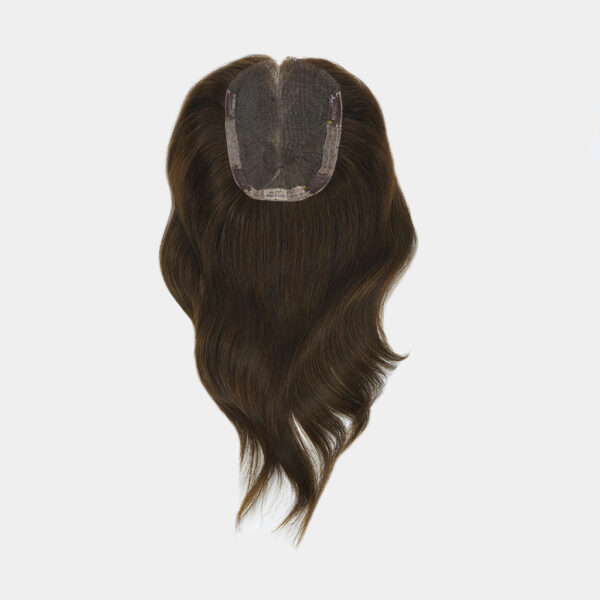
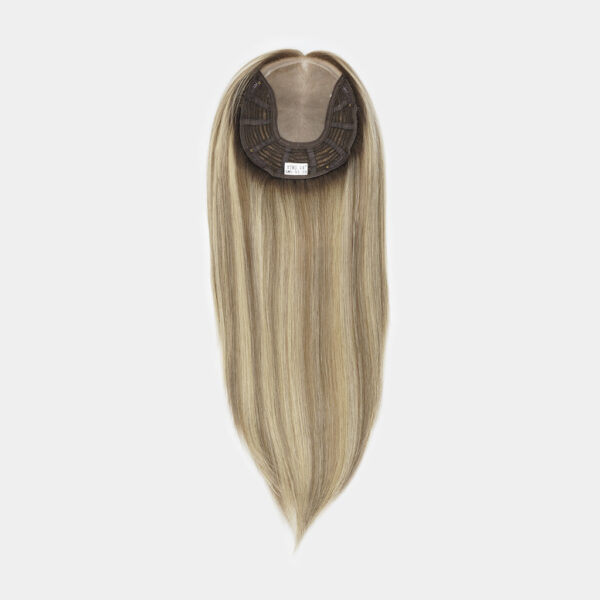
A Realistic Hairline: The Make-or-Break Detail
If someone is going to spot your topper, it’s usually at the hairline.
The most realistic toppers tend to have:
- A gradual, lighter density at the front (not a hard wall of hair).
- Single knots or bleached knots around the hairline to make each hair look like it’s growing out of the skin.
- A lace front that melts into your skin when attached properly.
If you don’t wear your hairline exposed (you keep a fringe or style it back slightly), you can be a bit more flexible. But if you like off-the-face styles, a well-designed lace front is almost non-negotiable.
Density and Length – “Too Perfect” Looks Fake
A lot of people think more hair = more realistic. It’s actually the opposite.
A realistic topper will:
- Match your natural density, especially around the temples and sides.
- Avoid being too thick on top (that “helmet” look is a dead giveaway).
- Sit at a length that makes sense for your haircut – not obviously layered on.
For receding hairlines and early thinning, slightly lower density with careful graduation at the front usually looks more like real, natural hair.
Color and Texture Matching – The Hidden Key
You can buy the most expensive topper in the world, and if the color and texture are off, it will still look wrong.
For a realistic look, you need:
- A shade that matches your roots, not just your ends.
- Similar undertone (warm, cool, ash, golden).
- Matching texture – straight with straight, wavy with wavy, curly with curly (or have the topper styled to match).
Hair changes with sun, dye, and age. That’s why many people still take a new topper to a stylist for:
- A tiny trim to blend.
- Some face-framing layers.
- Slight toning or color tweaks if needed.
Size and Coverage – Not Too Big, Not Too Small
The most realistic topper covers exactly what it needs to cover – no more, no less.
- If it’s too small, you’ll see a clear edge and struggle with blending.
- If it’s too big, it can overwhelm your own hair and sit like a “cap.”
For receding hairlines or part-line thinning, we normally recommend:
- Measure from the thinning area to the thinning area (front to back and side to side).
- Choose a base that comfortably covers that zone, plus a little extra for blending.
Comfort: If It Feels Wrong, You’ll Wear It Wrong
Realism isn’t just about how it looks, but also how you move in it.
A realistic topper should be:
- Light enough that you forget you’re wearing it most of the day.
- Secure enough that you’re not constantly adjusting it.
- Gentle enough on your bio hair that you’re not afraid it will break.
Modern toppers with lightweight bases, good clips, or alternative attachment options can be worn daily once you find your routine. And when you feel comfortable, you act natural – which is the ultimate “realistic” effect.
Stock vs. Custom – Which Looks More Real?
Both can look realistic, but in different ways.
Stock toppers:
- Ready to ship, pre-made colors and sizes.
- Great if you’re close to a standard shade and size.
- Often, you need just a small cut-in to look natural.
Custom toppers:
- Made to your exact measurements, color, density, curl pattern, and base choice.
- Take longer to make and cost more.
- Ideal if your color is tricky, your hairline is unique, or you’re very picky (in a good way).
If you want the “no one will ever guess” level of realism, a well-done custom piece often wins. But a high-quality stock topper, properly blended, can also look incredibly real.
So… What Is the Most Realistic Hair Topper?
If we had to describe it, not name a single model, it would look like this:
- Human hair, matched to your color and texture.
- A lace front for a soft, natural hairline.
- A silk or mono top for a clean, realistic part.
- Medium–light density, with gradual front density.
- A base size that matches your thinning area, not oversized.
- Properly cut and blended by someone who knows what they’re doing.
The truth is, the “most realistic” topper is the one that’s:
- Built with the right materials,
- Matched to your hair,
- And customized just enough that it stops looking like a product and starts looking like… you.
If you get those three things right, even people standing close to you won’t know it’s a topper – and that, in our book, is as realistic as it gets.